
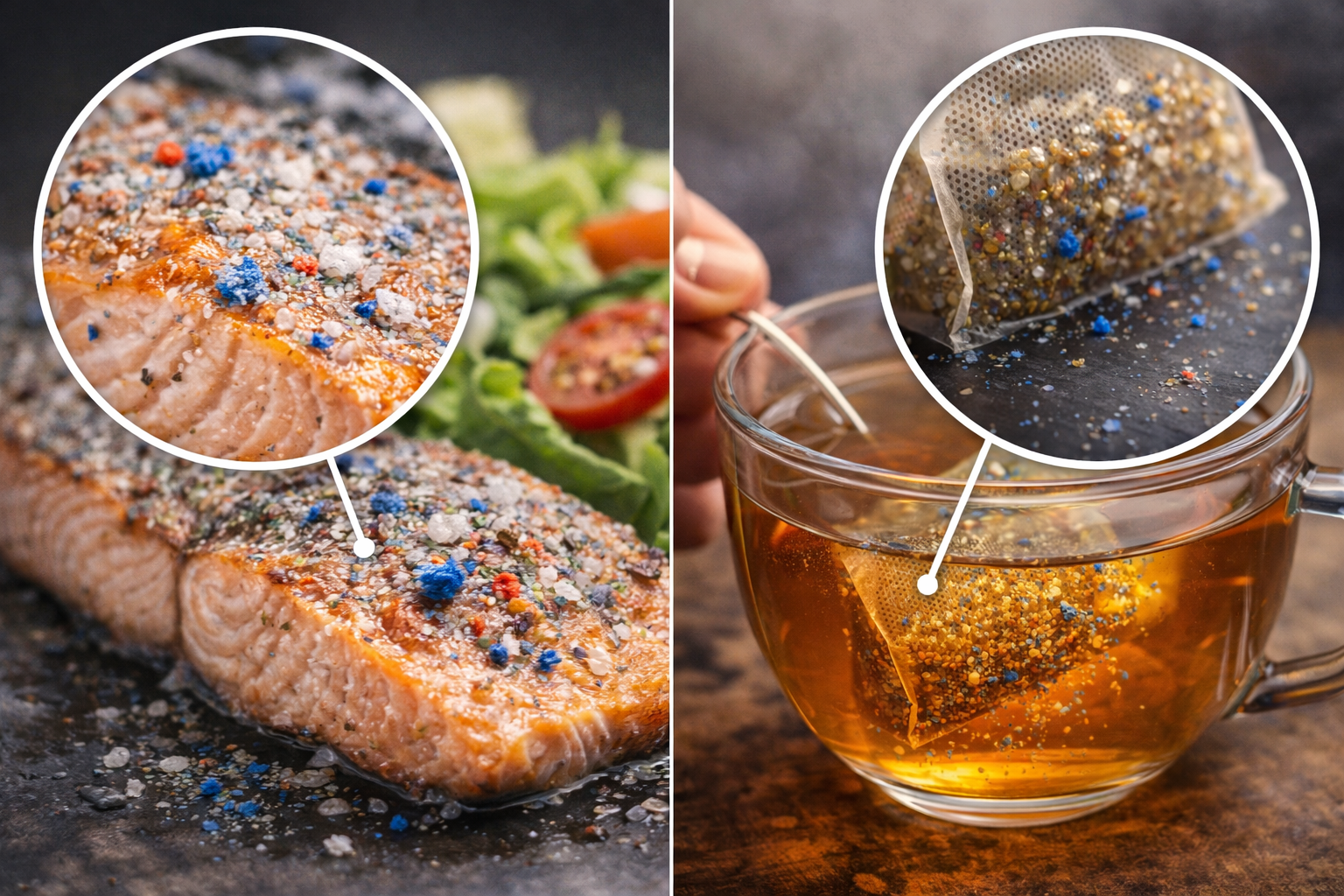
You might think microplastics only affect heavily processed products. That assumption is dangerously wrong. Some of the most common foods people consume without hesitation are already known to contain microscopic plastic particles.
1. Fish
Fish are one of the most common sources of microplastics in the human diet. Oceans, rivers and lakes are heavily contaminated with microscopic plastic particles that come from broken-down waste, synthetic clothing fibers released during washing, and industrial pollution. Fish mistake these particles for food. Once ingested, the plastic does not dissolve. It can remain inside the fish’s body and digestive system. When fish are eaten, microplastics may be consumed along with them. This is especially alarming because fish is often promoted as a healthy food choice. People eat it for omega-3 fatty acids and heart health, without realizing they may also be ingesting plastic particles at the same time. The problem is not eating fish once. It’s eating it regularly.
2. Tea Bags
Tea is something many people drink every day, often believing it to be calming and healthy. What most people don’t realize is that many tea bags are not made entirely from paper. They contain plastic-based fibers to help the bag keep its shape. When boiling water is poured over these tea bags, heat can cause thousands of microscopic plastic particles to release directly into the drink. There is no warning sign. The tea looks normal. It tastes normal. You would never know what’s floating in the cup. This means a daily habit that feels harmless may actually be a repeated source of microplastic exposure. And because the particles are invisible, most people never suspect a thing. Microplastics in fish is disturbing. Microplastics in tea is shocking. But these are only the first examples!
On the next page, you’ll discover more everyday products that may expose you to microplastics including something most people consume multiple times a day!