
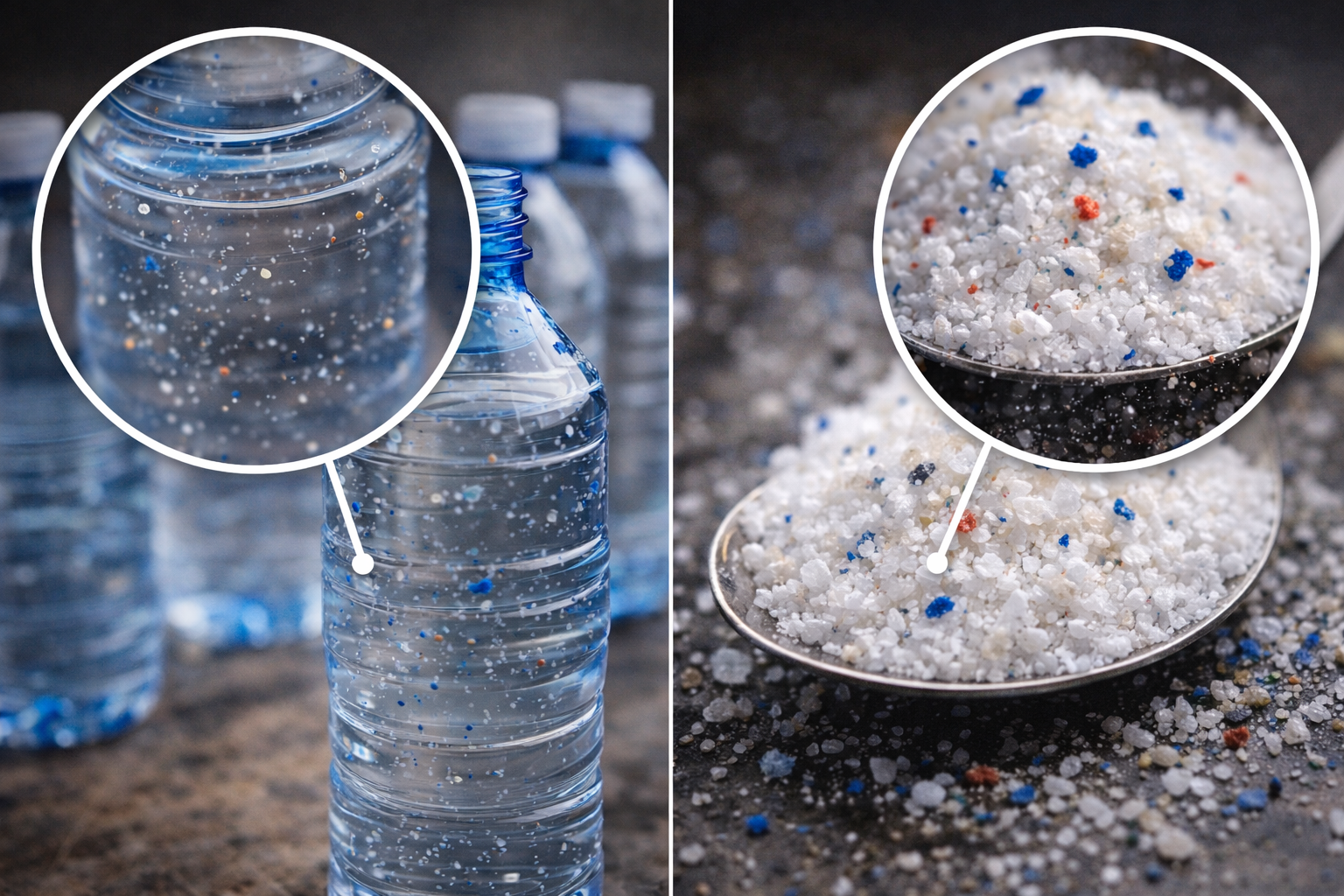
 3. Bottled Water
Many people choose bottled water because they believe it is cleaner or healthier than tap water. In reality, bottled water is one of the most well-known sources of microplastics. Plastic bottles slowly shed microscopic particles, especially when they are exposed to heat, sunlight or movement during transport and storage. Every time the bottle is squeezed, opened or left in a warm place, tiny plastic fragments can be released into the water. Studies have repeatedly found that bottled water often contains more microplastics than tap water. This means that something people drink multiple times a day may be exposing them to plastic without any visible warning. Ironically, the container meant to protect the water is often the source of contamination.
4. Table Salt
Salt is one of the most basic ingredients in any kitchen. It seems impossible that something so simple could be contaminated. Yet salt, especially sea salt, has been found to contain microplastics in multiple studies. Salt is often harvested from seawater, where microplastics are already widespread. During processing and drying, additional plastic particles from the air or equipment can settle into the salt crystals. Because the particles are so small, they remain mixed in the final product. Salt is used daily, often several times a day. That makes long-term exposure easy to overlook, even though it happens constantly. And unfortunately, it still doesn’t stop here.
On the next page, you’ll see two more foods that may contain microplastics including one that many people consider completely natural!