
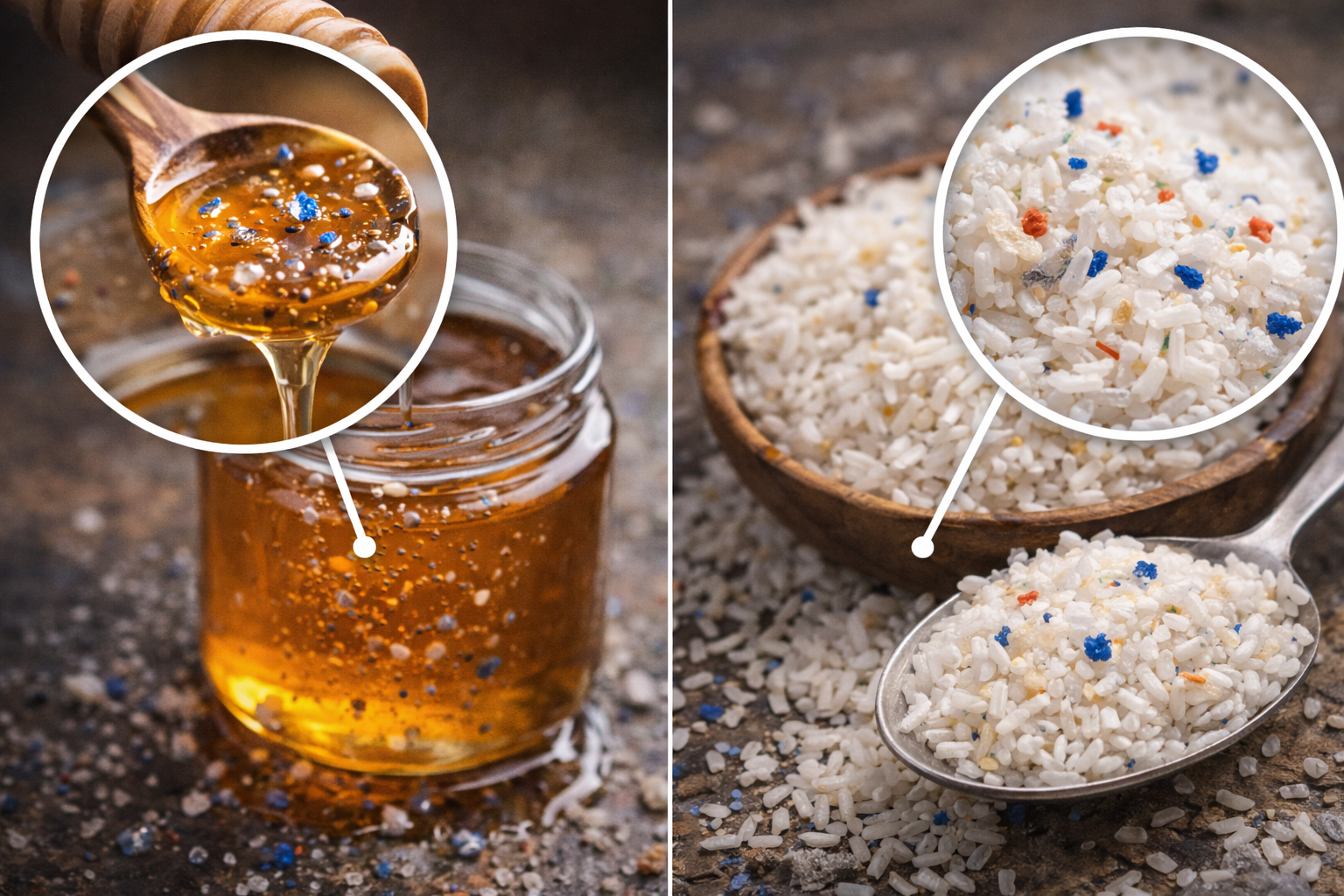
 5. Honey
Honey is often seen as one of the purest foods available. Natural, unprocessed and straight from nature. But even honey has been found to contain microplastics. Bees are constantly exposed to their environment. They collect pollen, drink water and fly through air that increasingly contains microscopic plastic particles. These particles can cling to pollen or be carried back to the hive. Over time, traces of microplastics can end up in the honey itself. Even honey produced in rural areas has shown contamination, which suggests the problem is widespread and not limited to cities or industrial zones. What makes this especially unsettling is that honey is often consumed for its perceived health benefits.
6. Rice
Rice is a staple food for billions of people around the world. It is eaten daily in many households and is often considered a simple, safe source of energy. But rice can also be a source of microplastics. Rice is grown using large amounts of water, which may already contain microplastics. During harvesting, processing, transportation and packaging, rice often comes into repeated contact with plastic materials. Each step increases the chance that microscopic plastic particles become mixed in with the grains. Because rice is consumed so frequently, even small amounts of contamination can lead to repeated exposure over time. And yet, there are still more everyday foods affected by this problem!
On the next page, you’ll discover the final foods on this list including products many people consume multiple times a day without thinking twice!