
 7. Sugar
Sugar is used in countless products and consumed daily by millions of people. What many don’t realize is that sugar can be contaminated during processing, drying and packaging. Sugar crystals are often processed in open environments where airborne microplastics can settle into the product. Packaging and storage in plastic materials further increase the risk. Because sugar is added to so many foods and drinks, even small amounts of contamination can lead to repeated exposure over time. What makes this especially concerning is how frequently sugar is consumed, often without people being aware of how much they are actually eating.
8. Processed Foods
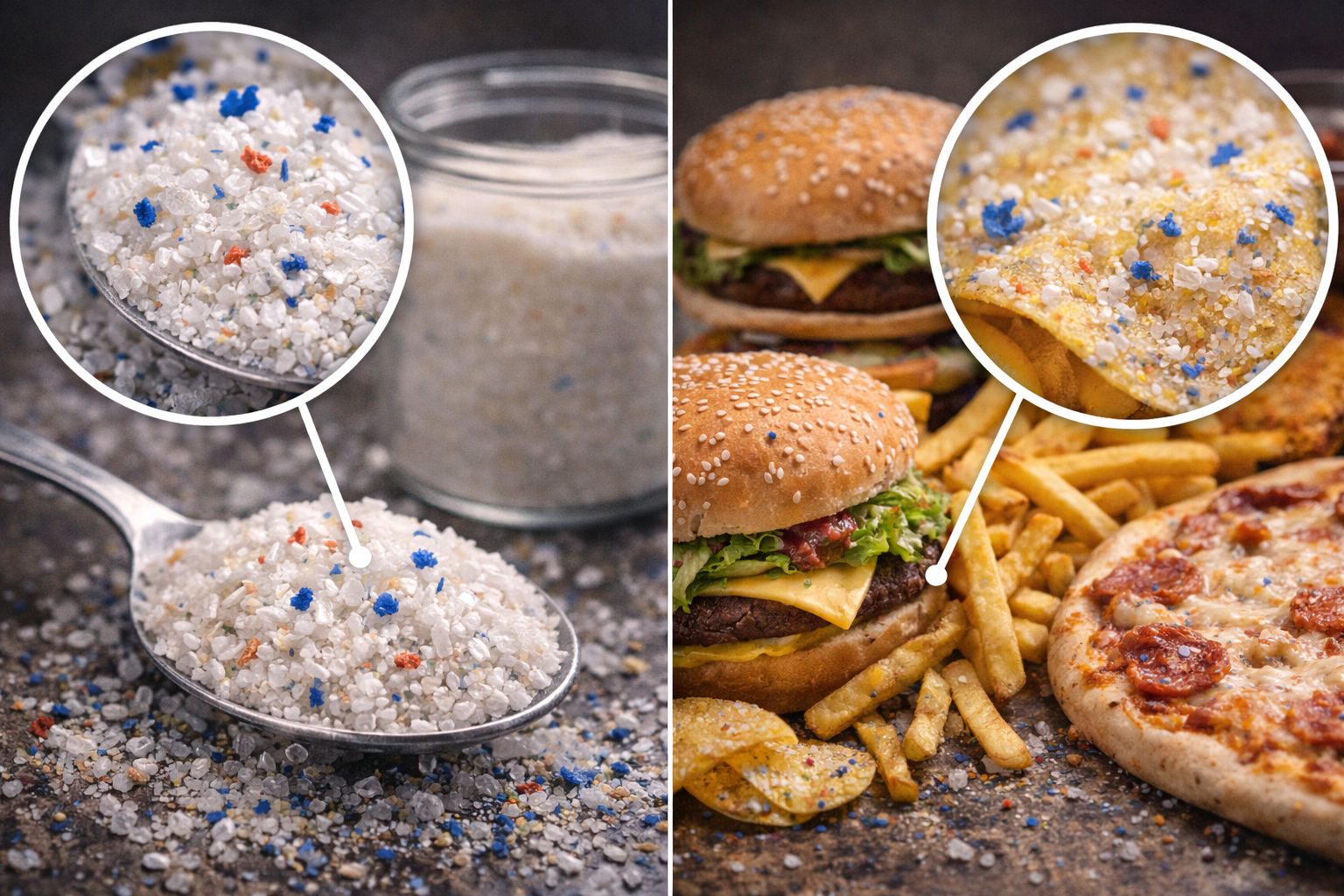
Processed foods often come into contact with plastic at multiple stages. From production lines and storage containers to wrapping and packaging, plastic is involved at nearly every step. Heat, friction and long storage times can cause microscopic plastic particles to migrate into the food itself. The more processed a product is, the more opportunities there are for contamination to occur. These foods are often eaten for convenience, making exposure frequent and ongoing rather than occasional. Microplastics are not limited to one category of food. They appear in water, staples, natural products and processed meals alike. The issue is not a single item, but the accumulation over time. Once plastic enters the body, it does not simply vanish. And as long as microplastics remain present in the environment, they will continue to find their way into the food we eat. Awareness is the first step. Because once you know where microplastics are hiding, it becomes harder to ignore what’s on your plate.